Bronze-smith of Ten Alders
The Bronze-smith of Ten Alders is Ged's father, a grim and unspeaking man who provides the material context of his son's childhood but remains emotionally distant, ultimately serving as a foil to the mages who recognize and nurture Ged's true potential. He is a craftsman who works with his hands, a man of few words and harsh discipline, whose role in Ged's early life is defined by labor, blows, and a stubborn, uncomprehending pride that contrasts sharply with the wisdom of Ogion and the other wizards who later guide the boy.
Identity and Background
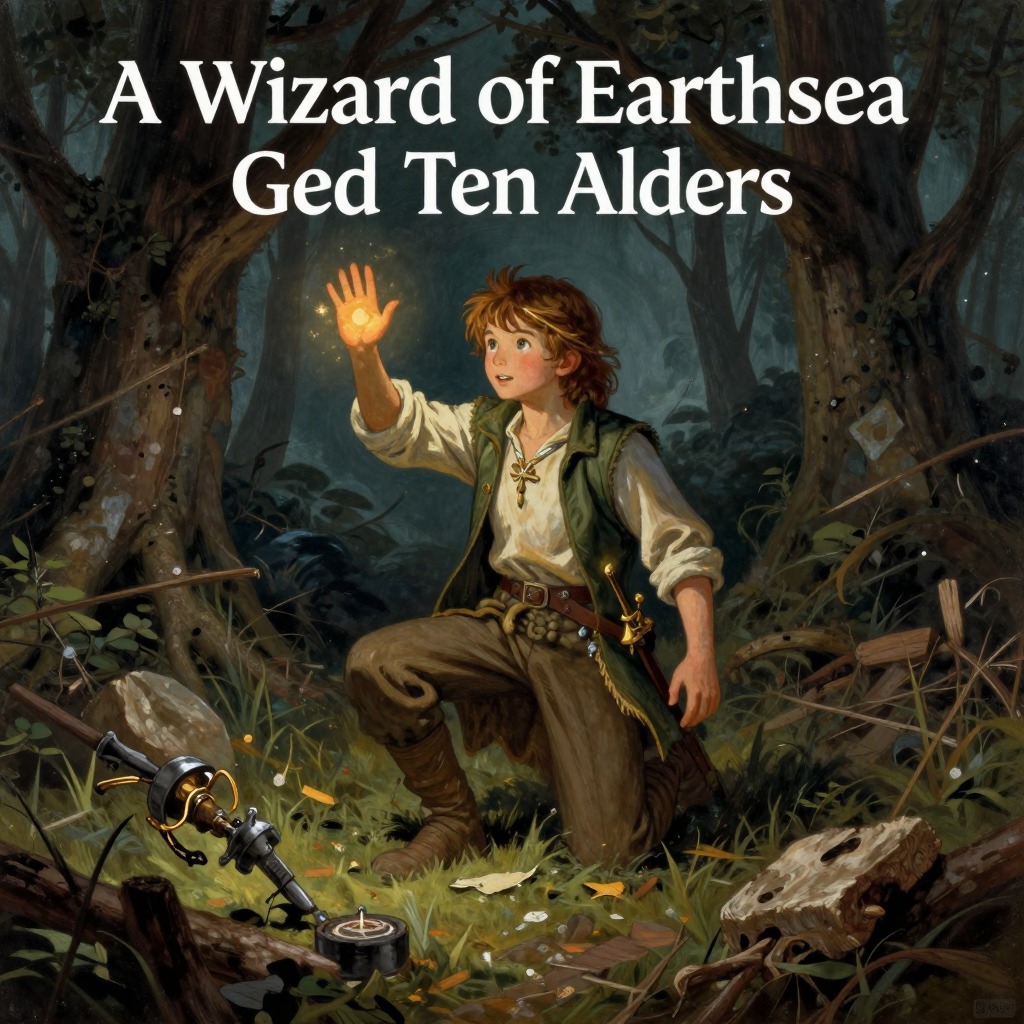
The Bronze-smith of Ten Alders is a grim, unspeaking man, a craftsman who works the forge in the lonely mountain village. He is the father of six older sons who, one by one, leave home to farm, sail, or work as smiths in other towns of the Northward Vale. His wife, Duny's mother, died before the boy was a year old, leaving the smith to raise the child alone. With no tenderness in the household, Duny grew wild, a "thriving weed," and was made to work as the smith's boy, a role he performed "at a high cost in blows and whippings." The smith's world is one of physical labor and practical skill, a realm where the intangible arts of magic have no place.
Role in the Kargish Raid
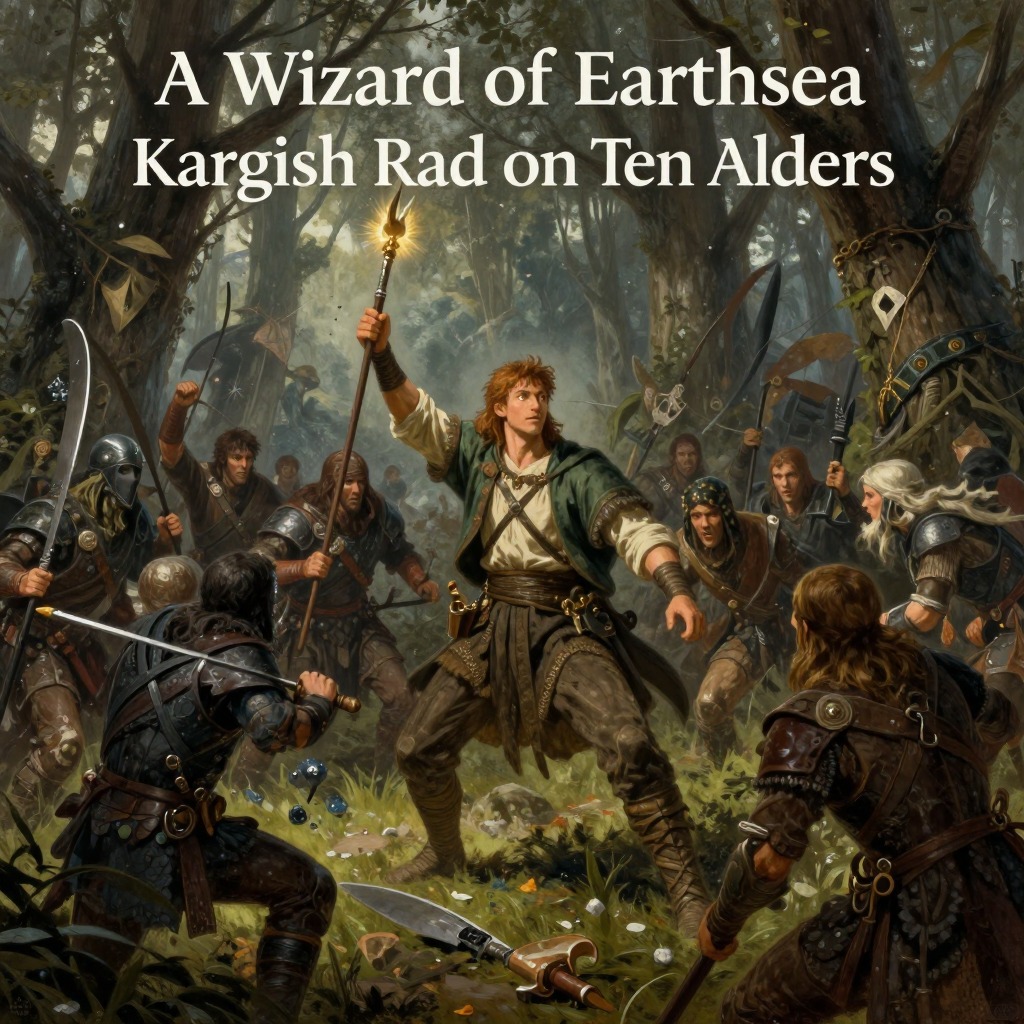
During the Kargish raid on Ten Alders, the Bronze-smith's actions reveal his character. He refuses to flee, staying to protect his smelting-pit and forge where he had worked for fifty years. All night he labors, beating up ready metal into spear-points, while others bind them to hoe and rake handles. When his son Duny begins to weave a fog-spell to conceal the village, the smith strikes him hard on the side of the head, knocking him down, and commands him to "Be still, fool! keep your blattering mouth shut, and hide if you can't fight!" He does not understand the nature of his son's power, seeing only a boy making noise at a dangerous moment. Yet when Duny explains that he has hidden the village, the smith grasps the strategy and runs to lead the others, using his knowledge of every fence and corner to guide the counterattack.
Relationship with Ged
The relationship between the Bronze-smith and his son is marked by distance and a failure of understanding. The smith provides for Ged's material needs—forging him a good bronze knife for his journey—but offers no emotional warmth or guidance. When the mage Ogion arrives to name the boy, the smith is initially daunted but ultimately assents to all Ogion says, recognizing that his son's path lies beyond the forge. The smith's world is one of tangible things: the fire, the metal, the spear-point. He cannot comprehend the intangible power that his son possesses, a power that will lead Ged away from the village and into a destiny the smith can neither share nor fully witness. In the final confrontation with the shadow on the Open Sea, Ged sees his father's face in the shifting forms of the approaching darkness, a fleeting image of the grim, grey figure from his past, before the shadow sheds all human likeness and reveals its true, formless nature.
Narrative Significance
The Bronze-smith of Ten Alders represents the ordinary, unmagical world from which Ged must depart. He is a figure of authority and physical strength, but his power is limited to the forge and the village. His inability to understand or nurture Ged's innate gift underscores the necessity of the boy's journey to find mentors who can. The smith's harshness, his blows and whippings, contribute to Ged's early pride and temper, traits that will both drive and endanger him. Yet the smith also provides a model of stubborn courage, standing his ground against the Kargish invaders, a quality Ged will later draw upon in his own battles. The smith is a reminder of the world Ged leaves behind, a world of simple, honest labor that he can never fully return to, but whose values of endurance and craftsmanship remain a part of him.